
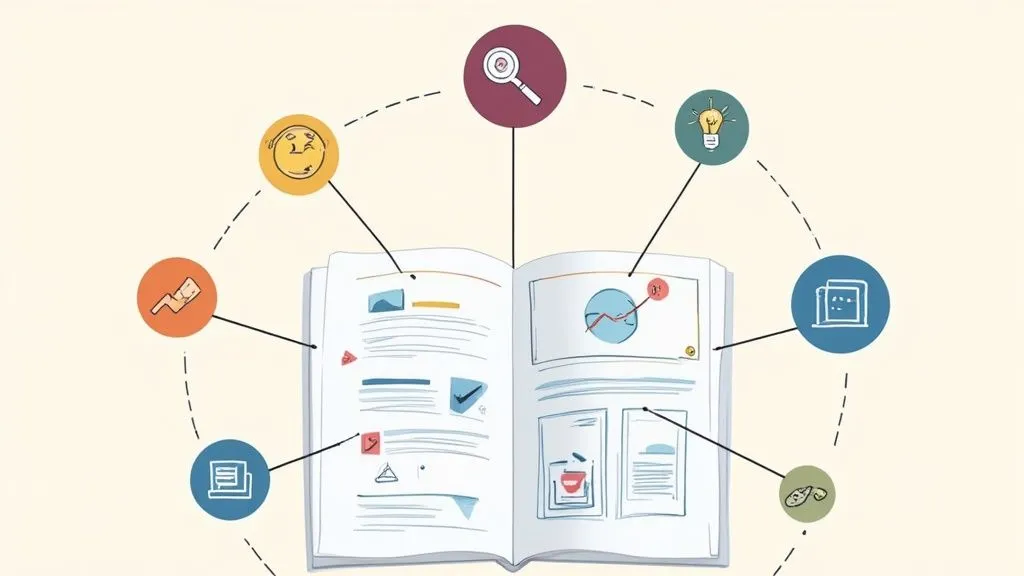
A customer can forget your logo in seconds, but they remember how your business made them feel. That is why brand story ideas matter for small businesses, local service providers, online shops, and growing companies across the USA. People do not connect with a brand because it sounds perfect. They connect because it feels honest, useful, and close to real life.
A strong story gives your business a reason to exist beyond sales. It explains why you started, who you help, what problem you saw, and why your way of doing things matters. A bakery in Ohio, a cleaning company in Texas, or a digital agency in Florida can all use story to make customers feel seen before they ever buy.
The smartest brands also know where to place that story. Your website, social posts, customer emails, product pages, and even your business visibility strategy can carry the same human message without sounding repetitive. The point is not to invent drama. The point is to uncover the truth people already want to believe about you.
Brand Story Ideas That Start With Real Customer Friction
The best stories rarely begin with the business owner. They begin with the problem the customer already knows too well. A brand that starts with customer friction feels more useful because it enters the conversation already happening in someone’s head. That is where connection begins.
Why Customer Pain Creates Instant Trust
A customer does not wake up wanting a “brand experience.” They want the leaky pipe fixed, the tax form handled, the wedding photos protected, or the dinner reservation to feel worth the money. When your story starts there, the reader relaxes because you are not trying to impress them first.
A local HVAC company in Arizona, for example, could tell a stronger story by opening with a family trying to sleep through a broken air conditioner in July. That moment says more than a polished company timeline. It shows the business understands the stakes before it talks about its services.
The counterintuitive part is this: your story becomes stronger when you talk less about yourself at first. Customers trust you faster when they see their own stress, delay, or confusion reflected with care. Recognition comes before loyalty.
How Small Details Make a Story Feel True
Specific details separate a real story from a flat marketing claim. “We help busy parents save time” sounds common. “We built our meal prep service after watching parents in suburban Chicago choose drive-thru dinners three nights in a row because they were too tired to cook” feels alive.
Small details also help American readers place themselves inside the story. A business does not need a national audience to sound relevant. A dog groomer in Denver can mention muddy spring trails. A tax preparer in New Jersey can mention the late-March panic that hits after W-2 forms pile up.
Strong storytelling does not mean sharing private customer details. It means using familiar scenes with enough texture to feel real. You are not exposing people. You are showing that your business understands the small pressures behind a buying decision.
Turning Founder Moments Into Honest Business Meaning
Customer pain may open the door, but founder meaning gives the brand a spine. People want to know why your business exists, especially when many companies sell the same thing. A founder story works when it explains the decision behind the business, not only the date it started.
What Your Origin Story Should Never Sound Like
Many origin stories fall apart because they read like a résumé. They list the year, the job title, the market gap, and the mission line. That kind of story may be accurate, but it does not carry feeling. It sounds filed away instead of lived.
A stronger version shows the moment that changed your thinking. Maybe a contractor in Georgia got tired of watching homeowners get unclear estimates. Maybe a salon owner in Michigan noticed women leaving appointments with nice hair but no confidence in how to care for it the next day.
The story should not make the founder look flawless. That is the mistake. A little tension makes the story believable because real businesses start from frustration, curiosity, stubbornness, or a mistake someone refused to repeat.
How to Connect Personal Experience to Customer Value
A founder moment only matters when it connects back to the customer. The story cannot stay trapped in “I always dreamed of starting this company.” The reader needs to know what that dream now does for them.
A family-owned moving company in Pennsylvania might explain that it started after one bad move ruined a college student’s first apartment experience. That personal moment becomes customer value when the company now confirms arrival windows, protects furniture, and explains fees before moving day.
This is where emotional honesty becomes practical. Your story should answer one quiet customer question: “Why should I trust you with this?” When the founder’s experience points to a better process, the story earns its place.
Using Brand Story Ideas Across Everyday Content
A story should not sit on one “About” page and collect dust. It should shape the way your business talks everywhere. The strongest brand story ideas become repeatable content angles that can appear in emails, social posts, service pages, short videos, and customer conversations without feeling copied.
How Social Posts Can Carry the Story Without Overselling
Social content works better when it shows the brand story in motion. A café in Nashville does not need to post “we care about community” every week. It can show the regular who orders the same coffee before his hospital shift, the local artist whose prints hang by the register, or the quiet morning rush before work.
Those posts tell the story without forcing the message. The customer feels the pattern. They see what the business values through scenes, not slogans.
The smart move is to rotate story angles. One post can show a customer problem. Another can show behind-the-scenes care. Another can explain a choice, such as why you source locally, answer calls faster, or package orders by hand. Repetition becomes trust when each post adds a fresh piece.
Why Service Pages Need More Human Context
Many service pages sound like they were written for search engines first and people second. They list features, coverage areas, and benefits, but they forget the moment that brought the reader there. A story-led service page fixes that gap.
A home inspection company in North Carolina could open a service page by talking about the nervous week between an accepted offer and closing day. That is the emotional frame. Then the page can explain what the inspection covers, how reports work, and why clear photos matter.
This approach does not weaken SEO. It helps the page feel useful. Search traffic may bring the person in, but human context keeps them reading long enough to trust the business.
Building Customer Stories Without Sounding Fake
Customer stories can build deep connection, but only when they feel grounded. The goal is not to make every buyer sound like a hero in a commercial. The goal is to show real before-and-after moments that future customers can recognize.
What Makes a Testimonial Worth Reading
A weak testimonial says, “Great service, highly recommend.” A stronger one shows what changed. The customer was confused, rushed, nervous, skeptical, or disappointed by past options. Then your business helped them reach a better result.
A roofing company in Missouri might share a customer story about a homeowner who feared storm damage would lead to surprise costs. The story becomes useful when it shows how the company inspected the roof, explained the photos, handled timing, and reduced confusion before repair work began.
The best customer stories do not need dramatic endings. Sometimes the strongest result is simple peace of mind. That kind of outcome feels honest because many customers want less stress more than they want excitement.
How to Ask Customers for Better Story Details
Customers often give vague praise because businesses ask vague questions. “Can you leave us a review?” usually leads to short answers. Better questions help people remember the change.
Ask what problem made them look for help, what worried them before choosing, what part of the process surprised them, and what felt easier afterward. These questions work for local shops, B2B firms, health services, home contractors, and online businesses because they focus on lived experience.
The unexpected insight is that customers usually do not know which part of their story matters. You have to help them find it. Once they name the friction and the relief, the story becomes useful for the next person standing in the same place.
Making Story Feel Consistent Without Sounding Repeated
A brand story grows stronger when it stays consistent across every touchpoint. That does not mean copying the same paragraph everywhere. It means the same belief, tone, and promise should show up in different forms.
How to Create a Simple Story Filter
A story filter helps you decide what belongs in your content. It can be as simple as one sentence: “We help first-time homeowners feel less lost during repairs,” or “We help small business owners make cleaner decisions with less guesswork.” That sentence becomes a compass.
A bookkeeping firm in Seattle could use its filter to shape blog posts, emails, homepage copy, and client onboarding. Every piece of content would speak to clarity, calm, and control. The words may change, but the emotional promise stays steady.
This matters because customers notice inconsistency fast. If your homepage sounds caring but your emails sound cold, the story breaks. Trust leaks through the cracks.
Why Strong Brands Leave Some Stories Out
Good storytelling also requires restraint. Not every founder memory, customer win, or behind-the-scenes detail deserves public space. A clear brand knows what to leave out because too many messages make the business harder to remember.
A boutique fitness studio in California might avoid telling every story about weight loss, performance, community, confidence, and wellness at once. It may choose one main lane: helping beginners feel safe in a gym setting. That focus makes the brand easier to believe.
Less can carry more weight. A simple story repeated with fresh proof beats a crowded story that tries to make everyone feel included.
Conclusion
A stronger connection does not come from louder branding. It comes from saying something true often enough, clearly enough, and human enough that customers begin to recognize themselves in it. Your business already has raw material: the problem you solve, the reason you care, the customers you serve, and the choices you refuse to compromise.
The work now is to shape those pieces into brand story ideas that feel useful, not decorative. Start with one customer frustration. Tie it to one honest reason your business exists. Then carry that message through your website, social content, reviews, emails, and sales conversations.
American customers see endless marketing every day, but they still respond to businesses that sound awake, specific, and real. Choose one story angle this week, write it plainly, and place it where your next customer will meet it first.
Frequently Asked Questions
What are easy brand storytelling tips for small businesses?
Start with the customer problem before talking about your business. Use a real-life scene, explain why the issue matters, and show how your company helps. Keep the story simple enough that a customer can repeat it after reading it once.
How can a local business create a stronger customer connection?
Use familiar local details, customer frustrations, and honest service moments. A local business builds connection when people can see their own daily life inside the message. Speak like a neighbor who understands the problem, not a company chasing attention.
What should a founder story include for better branding?
A founder story should include the moment that shaped the business, the problem the founder noticed, and the customer benefit that came from it. Avoid a timeline-style story unless the dates reveal something meaningful about trust, skill, or purpose.
How do customer stories help build trust online?
Customer stories show proof through real situations. They help future buyers understand what changed, what felt easier, and why the business was worth choosing. A clear before-and-after story often feels more believable than a broad claim about quality.
Where should I use my business story on my website?
Place it on your homepage, About page, service pages, product pages, and selected calls-to-action. Each location should use a different angle. The homepage can show the promise, while service pages can connect the story to specific customer problems.
How can social media posts tell a better brand story?
Show small moments that reveal your values. Share behind-the-scenes care, customer questions, team habits, local scenes, or product choices. Avoid repeating the same mission line. Let people understand your story through proof they can see.
What makes a brand story sound fake?
A story sounds fake when it uses broad claims, perfect founder language, or emotional drama with no details. Real stories include friction, limits, choices, and specific moments. Customers trust honest tension more than polished perfection.
How often should a business update its brand story?
Review the story every six to twelve months, especially after major service changes, audience shifts, or new customer patterns. The core belief may stay the same, but examples, proof, and customer language should stay fresh.