
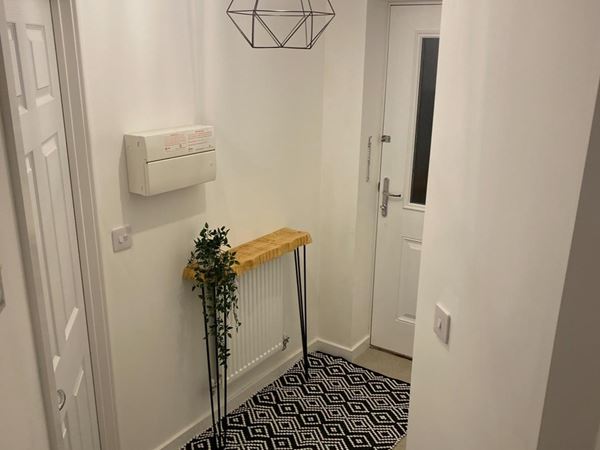
A narrow hallway can make the whole home feel tighter than it is, even when the rooms beyond it are spacious and bright. Good narrow hallway decor changes that feeling fast because it turns a pass-through space into a place with rhythm, purpose, and a little personality. In many American homes, especially apartments, townhouses, older Cape Cod houses, and suburban split-level layouts, hallways get treated like leftover space. That is the mistake.
The right choices do not require a full remodel. A lighter wall color, a slimmer console, a better mirror, or one strong piece of art can shift the entire mood. For homeowners who care about practical home upgrades and smart presentation, resources like home improvement visibility can also help connect design decisions with the way a property feels to guests, buyers, or future renters.
A hallway should not apologize for being narrow. It should guide the eye, hold daily items without clutter, and create a clean pause between rooms. Once you stop decorating it like an afterthought, it starts working like part of the home.
Build the First Impression Before Adding Decor
A narrow hallway has no room for lazy choices. Every item earns its place because the space is already asking for mercy. Before you bring in frames, baskets, shelves, or runners, you need to decide what the hallway should do when someone first sees it. Should it feel calm? Polished? Warm? Practical? That answer controls every choice after it.
Use Color to Stretch the Space Without Making It Flat
Paint can do more for a tight hallway than most furniture ever will. In a small hallway design, pale warm white, soft greige, muted sage, and light taupe can open the walls without making the area feel cold. Pure white sounds safe, but it can look harsh under weak hallway lighting, especially in homes with little natural light.
A better move is to test paint at different times of day. A New Jersey townhouse hallway may look cream in the morning and dull beige by evening if the bulb temperature is wrong. That small test saves you from repainting a space that already feels hard to work in.
Contrast also matters. Dark trim with light walls can sharpen the hallway and make it feel more designed. The trick is restraint. A black door, bronze hardware, or warm wood baseboard can create depth without closing the walls in.
Let One Visual Anchor Control the Mood
A narrow space feels messy when too many items compete for attention. One anchor gives the eye somewhere to land. That anchor might be a framed print, a slim bench, a vintage mirror, or a runner with quiet pattern. The hallway feels planned because one piece leads and the others support it.
A Chicago apartment entry hall, for example, may only have room for a 10-inch-deep console. That one slim surface can still carry a ceramic bowl, a small lamp, and a single framed photo. Add more than that, and the charm turns into clutter fast.
The unexpected part is that small decor often makes a narrow hallway feel smaller. One stronger piece usually beats five timid ones. A large vertical mirror can feel less crowded than a gallery of tiny frames because it creates one clean statement instead of visual chatter.
Narrow Hallway Decor That Adds Light, Shape, and Movement
Narrow hallway decor works best when it tricks the eye without feeling fake. You are not trying to pretend the hallway is wide. You are trying to give it enough light, line, and movement that the narrowness stops being the first thing people notice. That is where mirrors, lighting, runners, and wall placement matter more than expensive furniture.
Place Mirrors Where They Reflect Something Worth Seeing
A mirror in a hallway is not magic by itself. It only helps when it reflects light, art, a doorway, or a pleasing view. Hang it where it catches a window from a nearby room, a lamp glow, or the opening into a living space. If it reflects a coat pile or a blank opposite wall, it may double the problem instead of solving it.
Oval and arched mirrors soften tight corridors because they break up the hard lines of doors and walls. Rectangular mirrors work well too, but they need clean proportions. A long thin mirror can stretch the hallway visually, while a bulky framed one may feel like it is pushing back at you.
For narrow entryway ideas, mirrors near the front door often do double duty. They give you a last check before leaving and bounce light into a zone that often feels dim. That mix of use and beauty is exactly what a hallway needs.
Use Lighting Like a Design Tool, Not an Afterthought
Many hallways rely on one ceiling fixture that throws flat light down the middle. That creates shadows along the walls and makes the area feel tighter. Better lighting spreads attention across the space. Flush mounts, wall sconces, picture lights, and low-profile ceiling fixtures can all help if their scale fits the width.
Warm white bulbs usually feel better in home hallways than cool bulbs. Around 2700K to 3000K often gives enough brightness without the washed-out look common in rentals and older houses. In a narrow upstairs hallway, two simple flush mounts may do more than one fancy pendant that hangs too low.
Lighting also sets the pace. A small picture light above artwork can make the hallway feel like a quiet gallery. A pair of sconces can frame the path and make the walls feel intentional. The counterintuitive truth is simple: the fixture matters less than where the light lands.
Make Storage Look Designed Instead of Desperate
Storage is where narrow hallways often fall apart. Shoes collect by the door, mail stacks on ledges, backpacks lean against the wall, and suddenly the home feels busy before anyone reaches the living room. Good storage in a tight hallway should almost disappear. It should solve problems without announcing that the space had problems.
Choose Slim Pieces That Respect Walking Space
A hallway must stay easy to move through. That sounds obvious until a console table steals four inches too many and everyone starts turning sideways with laundry baskets. Slim furniture is not only a style choice. It is a comfort choice.
Space-saving hallway storage works best when it uses height, not floor depth. Wall-mounted shelves, narrow shoe cabinets, peg rails, and floating ledges keep the path clear. In a Boston brownstone or a compact Dallas apartment, even a shallow cabinet can hold gloves, keys, dog leashes, and folded totes without crowding the walkway.
Closed storage often looks calmer than open storage in narrow areas. Open hooks may suit a mudroom, but a front hallway can become chaotic when every jacket is on display. A small cabinet with doors can hide daily mess and make the hallway feel cleaner in seconds.
Give Daily Items a Home Near the Door
Hallways become cluttered when everyday objects have no assigned landing spot. Keys, sunglasses, mail, umbrellas, and reusable bags need a home close to where people actually use them. A pretty tray on a slim console can handle keys. A narrow wall pocket can hold mail. A small basket can catch dog gear.
The goal is not perfection. It is friction reduction. A family in a Phoenix ranch home may not need a formal entry, but they still need a place where school papers and car keys stop drifting across the house. Hallway storage should support real habits, not magazine fantasy.
One useful trick is to store only what belongs to the next exit or entry moment. Seasonal overflow belongs in a closet, garage, or bedroom storage area. The hallway should not become a waiting room for every object nobody wants to put away.
Use Walls to Add Character Without Taking Floor Space
Walls are the best real estate in a narrow hallway. They offer style without stealing walking room. The mistake is treating them as blank strips for random frames. Wall decor for hallways should create direction, scale, and story. Done well, it makes the hallway feel like a designed passage rather than a thin tunnel.
Build a Gallery Wall With Breathing Room
A gallery wall can work in a narrow hallway, but it needs discipline. Matching frames create order. Uneven spacing can look charming in a large room, yet it often feels jumpy in a tight corridor. Keep the center line steady and leave enough space between pieces so the wall can breathe.
Family photos can look beautiful here, especially in older American homes where hallways connect bedrooms and shared rooms. Black-and-white prints feel calm and reduce visual noise. A mix of vacation shots, school portraits, and small art can work if the frames share one finish or color family.
Wall decor for hallways should also match the length of the space. A short hallway may need one large piece. A long hallway can handle a sequence. The surprise is that empty space can be part of the design. You do not need to fill every foot to prove the hallway matters.
Add Texture With Panels, Wallpaper, or Quiet Pattern
Texture gives a hallway depth when there is no room for furniture. Board-and-batten, beadboard, picture-frame molding, grasscloth wallpaper, or peel-and-stick wallpaper can add shape without crowding the floor. These choices work well because they change the surface, not the footprint.
A narrow entry in a suburban Maryland home might feel plain with painted drywall alone. Add lower wall molding and a washable satin finish, and the same space suddenly feels tailored. It also handles scuffs better, which matters when kids, pets, and grocery bags pass through daily.
Pattern needs control. Large, soft patterns often work better than tiny busy prints because they do not vibrate in a tight space. A muted wallpaper on one side wall can add charm, while covering every surface may feel heavy. Let the hallway breathe a little.
Finish With Details That Feel Personal, Not Packed In
Once the big choices are working, the final details decide whether the hallway feels alive or staged. This is where many people go too far. They add candles, signs, baskets, faux plants, frames, and hooks until the hallway loses the calm they were trying to create. A narrow area rewards editing more than shopping.
Pick a Runner That Guides the Eye
A runner can turn a narrow hallway into a clear path. It adds softness underfoot, reduces echo, and draws the eye forward. The best runner fits the width with a few inches of floor showing on each side. Too wide, and it looks stuffed. Too narrow, and it feels like a strip floating in the middle.
Pattern matters because hallways get traffic. A low-pile rug with a forgiving print can hide dirt better than a flat pale runner. In many U.S. homes, especially with kids or dogs, washable runners are a sane choice. They keep the space stylish without asking the family to tiptoe through real life.
Small hallway design benefits from direction. Stripes, subtle borders, and lengthwise patterns can make the passage feel longer and cleaner. A loud rug can work, but only when the walls and lighting stay calm around it.
Add Life With One Natural Element
A hallway without any organic texture can feel stiff. One natural element changes that. It might be a small wood stool, a woven basket, a dried branch arrangement, a ceramic planter, or a framed botanical print. You do not need a jungle. You need one sign that a human lives here.
Plants can be tricky in hallways because many lack sunlight. Low-light plants may survive near a doorway or window, but fake greenery often looks better than a dying plant. Choose carefully. A good faux stem in a simple vase beats a sad real plant dropping leaves onto the runner.
The final layer should feel personal but edited. A framed kid’s drawing, a small landscape from a local flea market, or a photo from a family trip can carry more warmth than a generic quote sign. Narrow entryway ideas work best when they make daily life smoother and give guests a quick sense of who lives inside.
Conclusion
A narrow hallway asks for honesty. You cannot force it to act like a wide foyer, and you do not need to. The smartest approach is to give it a clear job, better light, slimmer storage, and a few details that feel chosen instead of squeezed in.
That is the real power of narrow hallway decor. It teaches you to edit with purpose. Every mirror, runner, hook, frame, and shelf has to earn the space it takes. When you decorate this way, the hallway stops feeling like dead square footage and starts becoming part of the home’s personality.
Start with the piece causing the most daily friction. Maybe it is poor lighting. Maybe it is shoe clutter. Maybe it is a blank wall that makes the whole home feel unfinished. Fix that first, then let the next choice follow naturally. A better hallway does not need more stuff. It needs better decisions, made one smart layer at a time.
Frequently Asked Questions
What are the best narrow hallway decor ideas for small homes?
Start with light wall color, a slim runner, one mirror, and storage that stays off the floor. Keep decor vertical and edited. A narrow hallway feels better when each piece has a purpose and the walking path stays open.
How can I make a narrow hallway look wider?
Use mirrors, warm lighting, pale wall colors, and a runner that leaves floor space visible on both sides. Avoid bulky furniture and busy wall clutter. The goal is to move the eye forward without crowding the side walls.
What colors work best for a small hallway design?
Soft white, warm greige, pale taupe, muted sage, and light beige often work well. These colors reflect light without feeling cold. Test samples under your hallway lighting before painting because narrow spaces can change color fast.
What furniture fits best in a narrow entryway?
Choose slim consoles, floating shelves, shallow shoe cabinets, wall hooks, and narrow benches. Keep depth low so people can pass through easily. Furniture should solve a daily problem without making the hallway feel blocked.
How do I decorate hallway walls without making them feel crowded?
Use one large artwork, a tidy gallery wall, simple molding, or quiet wallpaper. Keep spacing clean and avoid filling every inch. Hallway walls look better when there is breathing room between pieces.
Are runners good for narrow hallways?
Runners are a strong choice because they guide the eye, soften noise, and add warmth. Choose a low-pile or washable runner for high-traffic homes. Leave visible floor along both edges so the hallway does not feel squeezed.
What lighting is best for a dark narrow hallway?
Low-profile flush mounts, sconces, and picture lights work well. Use warm white bulbs around 2700K to 3000K for a welcoming glow. Spread light across the walls instead of relying on one harsh fixture in the center.
How can I add storage to a hallway without clutter?
Use wall-mounted storage, closed cabinets, trays, hooks, and baskets with clear roles. Store only daily exit items in the hallway. Move seasonal or overflow items elsewhere so the space stays calm and easy to use.