
A messy garage does more than steal floor space; it slowly trains you to avoid a room you paid for. For many American homeowners, Garage Organization Ideas become urgent only after the mower blocks the freezer, the bikes scratch the SUV, and the socket set disappears for the third time in one month. A garage should work like a small service bay, not a storage cave with a garage door. You need zones, clear paths, wall storage, and a system that fits real life after work, school pickup, weekend errands, and bad weather. Good planning also protects your vehicle from dents, spills, dust, and clutter that creeps too close to the paint. For homeowners building better routines around maintenance, storage, and home improvement, a trusted publishing and outreach resource can help connect practical ideas with readers who care about useful everyday upgrades. The point is not to create a showroom. The point is to make the garage easy to use on a normal Tuesday.
Garage Organization Ideas That Start With Vehicle Space
Your car should decide the garage layout before anything else does. Many people organize around shelves, bins, or old furniture first, then wonder why parking still feels tight. That is backward. The vehicle is the largest object in the room, and it moves in and out every day. Once the parking footprint is protected, every other decision becomes easier.
How to Measure the Parking Zone Before Moving Storage
A smart garage plan begins with the door swing, not the storage rack. Park the vehicle where it naturally sits, open every door, lift the trunk or hatch, and walk around it like you are carrying groceries. That tells you more than any measuring tape alone.
Most two-car garages in the U.S. end up holding one daily driver, lawn tools, sports gear, holiday bins, and a second car only when guests visit. That means the clear walking lane matters as much as the parking space. A narrow path beside the driver door can turn every morning into a small argument with the wall.
Painters’ tape helps here. Mark the tires, door edges, front bumper line, and a safe walking lane on the floor. Then treat the taped zone as untouchable. If a storage bin crosses that line, it has failed before it even gets labeled.
Why the First Five Feet Near the Door Matter Most
The front section near the garage door often becomes a dumping strip because it feels open. That space is also where bikes fall, trash bins roll, snow shovels land, and delivery boxes wait too long. Once that area gets messy, the whole garage feels worse than it is.
A better move is to keep the first five feet simple. Store only items that need fast outdoor access, such as trash cans, a snow brush, a leaf blower, or a folding wagon. Everything else should earn a place farther inside the garage.
One counterintuitive trick works well in suburban garages: leave some empty wall space near the door on purpose. Empty space feels wasteful at first, but it gives you room to handle wet boots, muddy gear, or a big warehouse-store box without blocking the car.
Build Zones Around How You Actually Use the Garage
Once the car has breathing room, the garage needs zones that match your habits. Most clutter comes from items that have no “home” close to where you use them. The rake lives behind paint cans. The jumper cables sit under pool toys. The extension cord hides in a box marked “misc.” That is not storage. That is delay wearing a label.
Vehicle Storage Solutions for Daily Drivers
Strong vehicle storage solutions begin with the things you reach for during real car ownership. Keep tire gauges, microfiber towels, windshield fluid, jumper cables, ice scrapers, and small emergency gear together in one reachable spot. Do not scatter them across cabinets because they belong to different product categories.
A family in Ohio, for example, might need snow brushes and salt in winter, while a driver in Arizona may care more about sunshades, dust towels, and extra water. The zone should reflect the climate, not a perfect garage photo from someone living three states away.
Place the car-care zone on the wall closest to the driver-side door or just inside the house entry. That small choice saves time. You are more likely to check tire pressure or wipe the windshield when the supplies sit exactly where your hand expects them.
Garage Tool Storage That Does Not Become a Museum
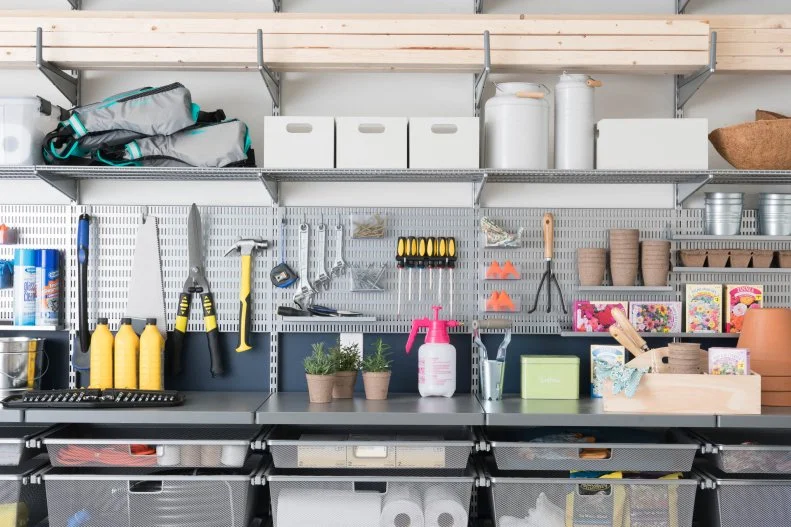
Good garage tool storage should make repairs faster, not make the wall look impressive. A pegboard full of tools can look neat and still fail if the items you use most are spread out by size or shape instead of task. Pretty storage is not the same as useful storage.
Group tools by job. Keep tire tools, battery tools, basic hand tools, and home repair tools in separate clusters. A simple socket set near the workbench beats a perfect row of sockets across the room.
The hidden mistake is over-displaying everything. Some tools belong in drawers because dust, humidity, and accidental bumps are real. Save the open wall for high-use tools, then put specialty items in labeled cases or shallow drawers where they stay clean and ready.
Use Walls, Corners, and Ceiling Space Without Making the Room Feel Tight
The garage floor is expensive space. Every box sitting on it competes with tires, doors, and your patience. Walls and ceilings can carry a lot of storage, but only when you use them with discipline. A packed wall can feel as stressful as a packed floor if it leans into your parking lane.
Small Garage Layout Choices That Create Real Room
A small garage layout needs vertical thinking, but not blind vertical stacking. Tall shelves should go on the deepest wall or the side farthest from the driver door. Slim wall rails work better near the car because they hold tools flat instead of pushing bulky shelves into the walking lane.
Corners are often wasted because they collect awkward items. Turn one corner into a tall-tool station for rakes, brooms, shovels, and sports sticks. Use wall-mounted grips instead of a barrel on the floor. Barrels seem easy, but they become tangled fast.
Overhead racks work best for light seasonal bins, not heavy items you dread lifting. Holiday decorations, camping pads, and empty coolers make sense above head level. Car fluids, tools, and anything used monthly should stay lower, where use does not feel like a chore.
How to Keep Car Care Supplies Safe and Easy to Reach
Car care supplies need more thought than people give them. Fluids, cleaners, waxes, towels, batteries, and chargers should not sit in one random plastic tote. Some items can leak. Some smell. Some lose usefulness when stored in heat or freezing conditions.
Use a closed cabinet for liquids and sprays, especially if kids or pets enter the garage. Keep absorbent pads, gloves, and trash bags nearby so small spills do not become permanent stains. A shelf liner also helps stop one leaky bottle from ruining wood or metal shelves.
Microfiber towels deserve their own clean bin. That sounds fussy until you wipe grit across a black hood and leave fine scratches in the paint. Clean towels are cheap insurance, and they only stay clean when they are not tossed beside garden tools.
Make the System Easy Enough to Maintain After a Busy Week
The best garage setup is the one you can reset in ten minutes. Many homeowners create storage that works only when they have a free Saturday and a burst of motivation. That system will fail by the second soccer practice, grocery run, or rainy weekend project. Maintenance has to be built into the design from the start.
Why Labels Work Better When They Sound Like Real Life
Labels fail when they sound like a store aisle. “Automotive,” “hardware,” and “outdoor” can become too broad to guide anyone. Use labels that tell people what belongs there in plain language: “wash the car,” “fix a flat,” “snow day,” “bike stuff,” or “yard tools.”
Families need labels that kids and guests can understand at a glance. A bin marked “balls and gloves” works better than “sports equipment.” A hook labeled “school bags” keeps backpacks from living on the hood of the car.
Clear bins help, but clear bins full of mixed clutter still look like clutter. Label the shelf, not only the bin. When the shelf has a purpose, the bin cannot quietly move to the wrong place and start a new mess.
The Ten-Minute Garage Reset That Saves the Weekend
A useful reset routine has three moves: return, remove, and restock. Return tools to their zone. Remove trash, boxes, and items that belong inside the house. Restock small supplies such as shop towels, gloves, windshield fluid, and trash bags before they run out.
Friday evening works well for many U.S. households because the garage gets hit hard on weekends. A short reset before Saturday errands keeps the space ready for car washing, lawn work, kids’ bikes, or a quick repair. Waiting until Sunday night turns cleanup into punishment.
One honest truth helps: the garage will never stay perfect. It should not have to. A good system bends under a busy week, then snaps back fast because every item has an obvious place to return.
Choose Storage Products That Fit the Garage, Not the Other Way Around
Buying storage too early creates expensive clutter. Shelves, hooks, racks, cabinets, and bins all solve different problems, and none of them can fix a garage full of items you no longer need. The right product is the last step after sorting, zoning, and measuring.
When Cabinets Beat Open Shelving
Cabinets work best for items that look messy, need protection, or should stay out of reach. Paint supplies, cleaners, sharp tools, and car fluids belong behind doors in many homes. Closed storage also helps garages that face the street, where the open door shows everything inside.
Open shelves work better for bulky items you grab often. Coolers, paper towels, sports bins, and garden supplies can live there without slowing you down. The trick is not choosing one style for the whole room. Mix them based on use.
A homeowner in a Houston suburb may want closed cabinets for pest control products and open racks for hurricane prep supplies. A Minnesota driver may need the opposite, with winter gear visible and car wash liquids tucked away during freezing months.
Why Cheap Bins Can Cost More Over Time
Cheap bins seem harmless until lids crack, stacks lean, and labels peel off in summer heat. Garage conditions are tougher than closets. Heat, dust, humidity, and cold all punish weak plastic.
Use stronger bins for anything stored high, anything heavy, and anything you will keep for years. Save low-cost containers for light items with short lives, such as donation piles or temporary project parts. This small split keeps the budget sane without making the whole system flimsy.
Matching bins look nice, but function matters more. A shallow bin for extension cords beats a deep bin where cords sink and knot. A wide bin for sports balls beats a tall bin that kids cannot reach. Storage should serve the item, not the photo.
Protect the Vehicle While Organizing the Rest of the Space
Garage storage should reduce risk around the car. A clean room still fails if a bike pedal hits the door, a ladder leans near the fender, or a shelf drops a bottle onto the hood. Vehicle protection is not a luxury detail. It is the reason the system exists.
How to Store Bikes, Ladders, and Bulky Gear Without Dents
Bikes cause more garage damage than most people admit. They tip, swing, roll, and crowd the car’s side panels. Wall-mounted bike racks work well when the garage has enough side clearance. Ceiling hoists can work too, but only if every rider in the house can use them safely.
Ladders should never lean loose beside a parked vehicle. Use horizontal wall brackets or ceiling mounts that lock them in place. A ladder that slides one time can leave a dent that costs more than the storage rack you avoided buying.
Bulky gear needs parking rules too. Wagons, strollers, golf clubs, and folding chairs should sit in a dedicated bay away from vehicle doors. When everything with wheels has its own landing spot, the car stops becoming the nearest available wall.
Floor Habits That Keep the Garage Cleaner Longer
The garage floor tells the truth about the whole system. If it is covered with boxes, loose cords, and random shoes, wall storage will not save the space. Floor clutter grows because it feels temporary. Then it stays.
Use floor zones only for items that are too heavy, too dirty, or too mobile for shelves. Trash cans, snow blowers, pressure washers, and large tool chests can stay grounded. Most other items should move up, hang flat, or sit in a cabinet.
A parking mat or tire stop can help drivers pull in consistently. That matters when shelves sit near the front wall. A few inches of repeatable parking can prevent bumper scratches, crushed bins, and the slow creep of storage back into the vehicle zone.
Conclusion
A garage does not need to look perfect to work beautifully. It needs a clear parking zone, smart walls, safe storage, and a reset routine your household will actually follow. The mistake many vehicle owners make is treating the garage like leftover space instead of a working room tied to daily life. Once you protect the car’s movement, group items by real tasks, and make cleanup simple, the entire space changes. Garage Organization Ideas should make ownership easier, not add another home project that needs constant babysitting. Start with one wall, one vehicle zone, and one messy category that bothers you every week. Build from there, and let the garage earn back your trust one clear space at a time.
Frequently Asked Questions
What are the best garage storage ideas for vehicle owners?
Start by protecting the parking zone, then move storage to walls, shelves, and cabinets. Keep car-care items near the driver-side entry, store tools by task, and place seasonal bins overhead only when they are light and rarely used.
How do I organize a garage when I still need to park inside?
Park the vehicle first, mark the safe walking area with tape, and treat that space as non-negotiable. Use wall rails, slim shelves, hooks, and closed cabinets so storage does not creep into the door swing or bumper clearance.
What should not be stored next to a car in the garage?
Avoid placing loose bikes, ladders, heavy boxes, paint cans, sharp tools, or leaking fluids near the vehicle. These items can dent panels, stain floors, scratch paint, or create safety risks when you open doors or walk around the car.
How can I make a small garage layout feel bigger?
Clear the floor first, then use vertical wall storage and overhead racks for light seasonal items. Keep bulky shelves away from the driver-side door, use corners for tall tools, and choose shallow storage where the car needs extra clearance.
What is the easiest way to organize garage tools?
Group tools by the job they perform, not by how they look on the wall. Keep basic hand tools near the workbench, tire tools near car supplies, and specialty tools in labeled drawers or cases to protect them from dust.
How should I store car care supplies in the garage?
Keep liquids, sprays, waxes, towels, gloves, and small detailing tools in one dedicated area. Store chemicals in a closed cabinet, keep clean microfiber towels in a sealed bin, and place spill cleanup items nearby for fast response.
Are overhead garage racks safe for vehicle owners?
Overhead racks are safe when installed properly and used for light, low-use items. Avoid storing heavy tools, car fluids, or awkward objects above the vehicle. Choose sealed bins and keep labels visible from below to reduce unnecessary lifting.
How often should I reset my garage organization system?
A ten-minute weekly reset works better than a major cleanup every few months. Return tools, remove trash, break down boxes, and restock small supplies before the weekend. A system that resets fast is easier to keep long-term.