
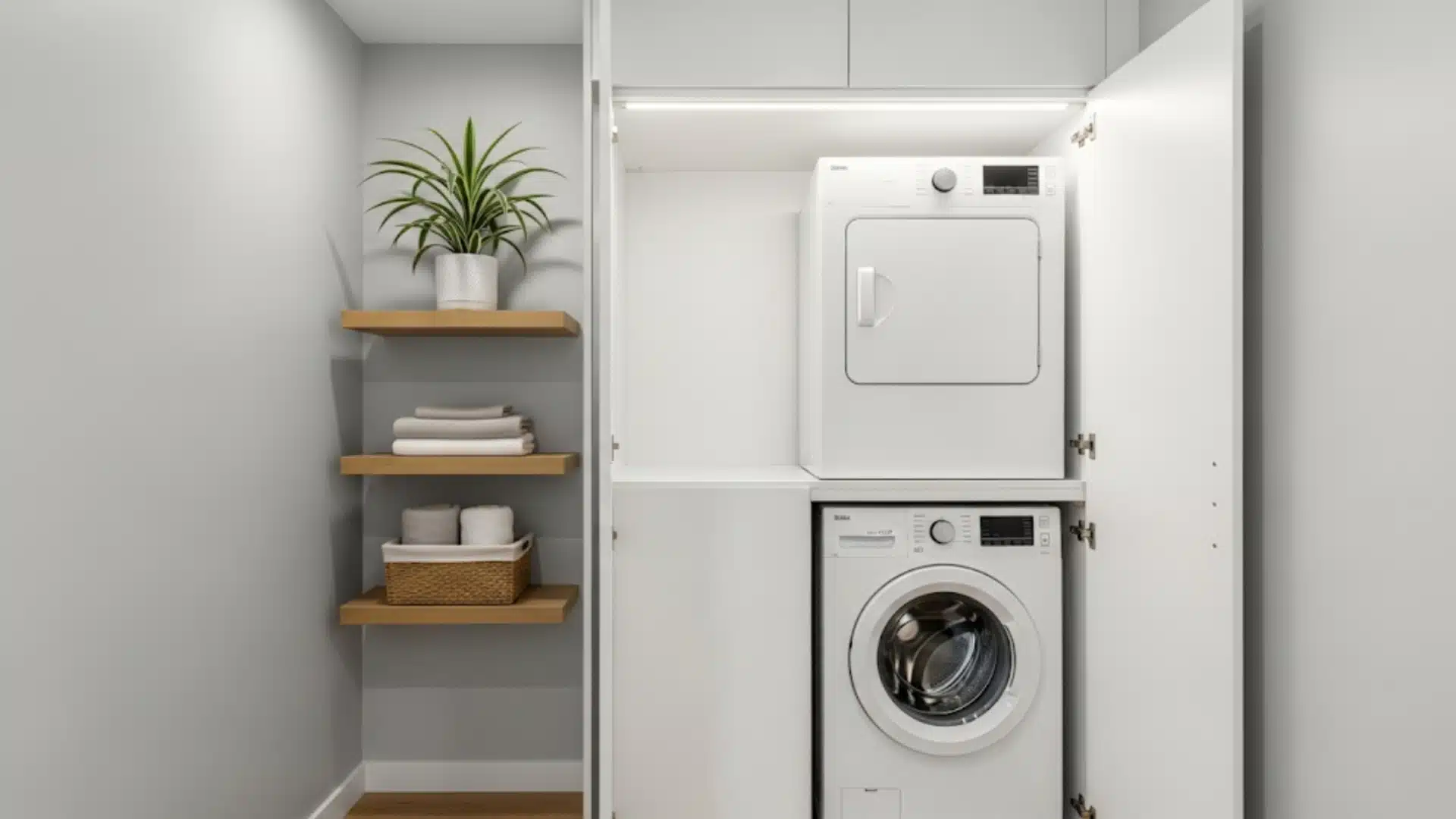
Laundry areas have a strange way of exposing how a home actually runs. A family can have a beautiful kitchen, a calm bedroom, and a tidy living room, then lose the plot beside the washer. Smart laundry room storage changes that pressure point before it turns into a weekly mess. In busy American homes, the problem is rarely laziness. It is usually a setup that asks tired people to make too many tiny decisions at the worst possible time.
The best systems do not make laundry feel glamorous. They make it easier to start, pause, sort, fold, and finish without turning one load into a two-day negotiation. A mudroom in Ohio, a hallway closet in Brooklyn, and a suburban laundry room in Texas all need different answers, but the principle stays the same: storage should match the rhythm of the household. When a home improvement plan is built around real daily movement, even a small laundry area can feel calmer. For more practical home and lifestyle planning, resources like smart home improvement ideas can help connect design choices with everyday function.
Laundry Room Storage That Works With Real Household Traffic
A laundry area is not a showroom. It is a working zone that handles school uniforms, gym clothes, muddy towels, pet blankets, cleaning supplies, and the occasional forgotten receipt. The first step is not buying bins. The first step is watching where the mess actually lands, then building storage around that pattern instead of fighting it.
Build Zones Around What Happens First
Every laundry space needs a landing zone before it needs decoration. The moment clothes enter the room, they need somewhere to go that does not block the floor, washer door, or folding surface. In a busy home, that usually means one spot for dirty laundry, one for items that need stain treatment, and one for things waiting to be returned.
A practical setup might include slim rolling hampers near the door, a small tray for pocket items, and a labeled bin for socks that lost their partners. It sounds ordinary, but this is where many homes fail. The mess begins before washing starts, so the storage has to meet the mess at the entrance.
Many families try to solve laundry chaos by adding shelves above the machines, yet the floor remains crowded. That is backwards. If shoes, towels, sports clothes, and backpacks pile near the washer, upper shelves will not fix the traffic jam. Lower storage earns its keep because people use what sits within reach.
A family in a split-level home, for example, may need a basket at the top of the stairs before laundry even reaches the room. That small move keeps clothes from forming piles on bedroom floors. The storage system starts where behavior starts, not where the washer happens to sit.
Make Sorting Feel Automatic, Not Like Another Chore
Sorting fails when it depends on memory. A tired parent should not have to decide where every item goes while dinner is cooking and a kid is looking for a missing jersey. Good laundry room organization removes that decision by giving each category a visible home.
Three hampers can handle most homes: lights, darks, and towels. Larger families may need one more for athletic wear or school uniforms. Labels help, but open access matters more. If someone has to lift a lid, pull out a drawer, or move another basket first, clothes will land on the nearest surface.
The counterintuitive truth is that pretty closed storage can make laundry worse. A row of identical cabinets looks calm in photos, but it can hide half-finished loads and forgotten supplies. Open bins, wire baskets, and visible shelves often work better because they show what needs attention.
Small laundry room storage should also protect the walking path. Narrow carts between machines, wall hooks behind the door, and stackable baskets under a folding bench can hold more than bulky cabinets in the wrong place. Storage is not about volume alone. It is about whether the right thing sits in the right place at the moment someone needs it.
Use Vertical Space Without Making the Room Feel Packed
Once the floor works, the walls can carry more responsibility. Vertical storage is powerful because most laundry rooms waste the space above eye level, behind doors, and beside appliances. Still, height has to be handled carefully. A wall full of shelves can become visual noise if every bottle, rag, and basket is left exposed.
Choose Shelves That Match Reach and Weight
The best laundry shelf ideas start with honesty about what belongs up high. Lightweight items like paper towels, extra dryer sheets, seasonal linens, and spare cleaning cloths can sit on upper shelves. Heavy detergent, bleach, and bulk supplies should stay lower, where spills and awkward lifting are less likely.
Open shelving works well above front-loading machines when it has enough clearance for lids, hoses, and safe movement. A single deep shelf can hold labeled bins, while a narrower shelf below it can keep daily supplies close. That layered setup feels better than one giant shelf that becomes a dumping ground.
In a small ranch home or apartment laundry closet, a shallow shelf may beat a deep one. Deep shelves invite forgotten bottles in the back. Shallow shelves keep everything visible, which matters when you are trying to finish laundry before work or before guests arrive.
There is also a safety angle that people skip. Homes with young children should avoid storing harsh cleaners in easy reach. A cabinet with a latch may be less photogenic than an open shelf, but it is the better choice when kids use the same hallway or mudroom.
Turn Doors and Side Walls Into Quiet Storage
Doors are often wasted because people think storage needs depth to matter. It does not. An over-the-door rack can hold lint rollers, stain sticks, mesh bags, cleaning gloves, and small spray bottles without stealing a single inch of floor space.
Side walls can do similar work. A few sturdy hooks can hold drying bags, collapsible hampers, or a hanging rod for shirts. In many American homes, the laundry area doubles as an entry zone, so hooks can also catch dog leashes, reusable grocery bags, or wet raincoats before they spread clutter through the house.
This is where laundry shelf ideas should stay disciplined. Not every empty patch of wall needs a shelf. Sometimes a hook, rail, or magnetic strip does the job with less visual weight. A packed wall can make a tight room feel smaller, even when it technically stores more.
One smart trick is to keep the center of the room visually open. Store items along the edges, above doors, behind doors, or along appliance sides. The room will feel easier to use because your eyes and body both read it as less crowded.
Store Supplies Where the Task Actually Happens
Laundry supplies create clutter because they come in awkward shapes. Detergent jugs, pods, sprays, dryer balls, clothespins, lint brushes, and cleaning rags rarely fit one neat category. The answer is not hiding everything. The answer is putting each item near the step where it gets used.
Keep Daily Products Close and Bulk Products Away
A home does not need a warehouse beside the washer. It needs a daily station. Keep one detergent, one stain remover, one lint tool, and one small container for dryer supplies near the machines. Backstock can live on a higher shelf, in a closet, or in a labeled bin away from the main work surface.
This matters because crowded counters slow people down. When every bottle sits beside the washer, the area becomes harder to wipe, harder to use, and easier to ignore. A clear surface is not about perfection. It gives you a place to treat stains, stack folded towels, or set down a basket without pushing bottles aside.
Laundry room organization improves fast when supplies are separated by frequency. Daily items earn prime space. Occasional items move out of the way. That simple rule works better than sorting by product type because it follows behavior instead of packaging.
A busy household in Florida, for instance, may use sports stain spray every other day because of heat, sweat, and outdoor activities. That product belongs near the washer. A wool sweater wash used twice a winter does not. Storage should follow use, not guilt from a sale at Costco.
Create a Small Station for Stains and Repairs
Stain treatment deserves its own small home. A tray, caddy, or narrow drawer can hold stain remover, a soft brush, old towels, and a small card with basic fabric reminders. This keeps the process from turning into a scavenger hunt.
Repairs need a spot too. A tiny container for loose buttons, safety pins, fabric tape, and a mini sewing kit can prevent damaged clothes from disappearing into a chair pile. Most families do not need a full sewing station. They need a rescue spot that keeps small problems from becoming clutter.
The unexpected insight here is that unfinished tasks create more mess than dirty clothes. A shirt with a missing button, a towel that needs soaking, or a sweater that must air-dry will sit around because it has no next step. Storage should give those in-between items a place to wait without taking over the room.
That is why a small labeled bin marked “needs attention” can be more useful than another cabinet. It admits that real laundry includes delays. A good system does not pretend everything moves from hamper to hanger in one perfect line.
Make Folding, Drying, and Returning Clothes Easier
Washing is only half the job. The harder part is getting clean clothes back where they belong. Many laundry rooms are designed around machines, not completion. That mistake leaves folded piles on counters, beds, dining chairs, and stair landings.
Give Folding a Surface That Stays Clear
A folding surface does not need to be huge, but it needs to exist. A counter above front-load machines, a wall-mounted drop-down table, or a narrow bench can change how the whole room works. Without a surface, clean laundry becomes mobile clutter.
The key is keeping that surface protected from supply creep. If detergent bottles, baskets, and random home items take over the counter, folding moves somewhere else. Once folding leaves the laundry area, the chances of clothes being put away drop fast.
Small laundry room storage can solve this with fold-down surfaces or removable trays. A wall-mounted table can disappear after use. A rolling cart with a flat top can move where needed. A shelf over machines can hold baskets while the machine tops stay open for folding.
A suburban family with three kids may not fold everything in the laundry room, and that is fine. The system only needs to reduce friction. Even folding towels and sorting each child’s clothes into separate baskets can stop clean laundry from becoming one giant mound.
Use Return Baskets Like a Delivery System
Clean laundry needs destinations. One basket per bedroom, or one bin per family member, can turn the final step into a simple delivery route. This works especially well in two-story homes where clothes often stall on the stairs.
The basket system also helps children participate. A labeled bin with a child’s name makes the task clear. Younger kids may not fold well, but they can carry their own basket and put pajamas in a drawer. The point is not perfect folding. The point is shared ownership.
Color-coded baskets can help, but labels are more flexible as families change. A guest basket, linen basket, and donation basket can also prevent clean items from blending with things that need another decision. The donation basket is sneaky in the best way; it catches clothes that no longer fit before they return to a drawer.
Laundry room storage gets stronger when it supports the exit, not only the entrance. A room that accepts dirty clothes but cannot release clean ones will always feel behind. The final step deserves as much design attention as the first.
Add Style Without Sacrificing the System
A stylish laundry space should still work when everyone is tired. Paint, baskets, wallpaper, tile, and hardware can make the room feel pleasant, but they should never bury the practical structure underneath. Beauty helps when it makes people want to use the space. It hurts when it turns storage into a performance.
Pick Materials That Can Handle Moisture and Mess
Laundry rooms deal with water, heat, lint, dust, detergent spills, and wet fabrics. Materials need to stand up to that reality. Wipeable shelves, washable rugs, sealed counters, and easy-clean wall finishes make more sense than delicate surfaces that punish normal use.
Baskets deserve the same thought. Woven baskets look warm, but they can snag fabric or collect lint if they are not lined. Plastic bins may look plain, yet they clean fast and handle damp towels better. Fabric bins work well for dry items, but they can lose shape under heavy loads.
A balanced room often mixes materials. Closed cabinets can hide bulk supplies. Open shelves can hold good-looking containers. Hooks can keep air-dry items from touching the floor. The result feels styled but still honest about the work happening there.
The counterintuitive move is to leave some empty space on purpose. Empty shelf space can feel wasteful until you need a spot for a soaked soccer uniform, a guest’s towels, or a basket of sheets. A laundry room with no breathing room becomes cluttered the first time life gets busy.
Use Color and Labels to Reduce Visual Stress
Style is not only about decoration. It can guide behavior. Clear labels, calm colors, matching baskets, and consistent containers help the eye understand the room faster. When people can read the system quickly, they are more likely to use it.
Labels should be plain and specific. “Towels,” “stains,” “cleaning cloths,” and “backstock” work better than cute phrases that require interpretation. This is a work zone, not a puzzle. You can still make labels attractive, but clarity comes first.
Color can also separate tasks. A white bin for linens, a gray bin for darks, or a blue basket for each child can make sorting easier without another explanation. Homes with multiple caregivers benefit from this because no one has to ask where things belong.
Good style removes hesitation. That is the part many photos miss. A pretty laundry room that only one person understands is not a system. A useful one makes sense to anyone who walks in with a basket and five spare minutes.
Conclusion
Laundry will never become the most exciting part of home life, and that is fine. The goal is not to make every load feel special. The goal is to stop laundry from stealing space, time, and patience from the rest of the house.
The strongest laundry room storage begins with movement. Clothes come in, supplies support the work, clean items leave, and every awkward in-between step has a place to land. That rhythm matters more than matching bins or expensive cabinets. A room that works for your actual household will always beat one designed for a photo.
Start with one pressure point this week. Clear the folding surface, add a sorting basket, mount two hooks, or move bulk detergent out of the way. Small changes count when they remove daily friction. Build the system around the way your home already lives, then let the room become easier one decision at a time.
Frequently Asked Questions
What are the best laundry storage tips for a small home?
Start with vertical storage, slim rolling hampers, hooks, and a clear folding surface. Keep daily supplies near the washer and move bulk items elsewhere. Small homes need storage that protects walking space, not bulky cabinets that make the room harder to use.
How can I organize laundry supplies without making the room look messy?
Group supplies by how often you use them. Keep daily products in a tray, drawer, or small caddy, then place extra bottles in labeled bins. Matching containers help, but clear categories matter more than perfect styling.
What should I store above my washer and dryer?
Store lightweight items above machines, such as dryer sheets, cleaning cloths, paper towels, mesh bags, and spare linens. Avoid placing heavy detergent jugs high overhead. A lower cabinet or shelf is safer for products that can spill or strain your arms.
How do I keep clean laundry from piling up?
Create a return system with one basket per bedroom or family member. Fold what you can in the laundry area, then move clothes directly to their destination. Clean piles build up when there is no clear next step after drying.
Are open shelves better than cabinets in a laundry room?
Open shelves work well for items used often because everything stays visible and easy to grab. Cabinets are better for bulk supplies, harsh cleaners, and visual clutter. Most homes benefit from a mix of both instead of relying on one style.
How can I make a laundry closet feel more functional?
Use the door, side walls, and space above the machines. Add an over-the-door rack, narrow shelves, hooks, and a small foldable surface if space allows. Laundry closets work best when every inch supports a specific task.
What baskets work best for family laundry organization?
Choose sturdy baskets that are easy to carry, clean, and label. One basket per person works well for larger families. For towels, linens, and uniforms, separate bins can prevent mixed piles and reduce sorting time.
How often should I reorganize my laundry storage system?
Review the setup every few months, especially after school seasons, sports schedules, holidays, or family changes. A system that worked last year may not match current routines. Adjust baskets, labels, and supply locations before clutter starts building again.